Archive for the 'Advertising' Category

Oct 06 2011

Honoring Promotional Incentives

 A LIVE CASE


OF LOST SALES


A major global service provider recently sent me a direct mail piece offering a $50 gift card for a retailer I frequent if I sign up for their online demo. Hey, this is a win-win-win, I said to myself. I like the service provider company and imagine doing business with them on behalf of some of my clients. I’m interested in their updated information.

The mailing piece suggested I reply by mail OR by phone or email. I called. The rep at first acted skeptical that I was a legitimate prospect (I don’t think I sounded like a freeloader!), but I convinced him otherwise and he proceeded to put my contact info in for the gift card and schedule a demo for me.

A few days later, I sat in on the demo and Q&A,

Three weeks passed, and a follow-up call from the rep prompted me to ask if, btw, there was some problem or delay with getting the gift card. He said he “had no control of the gift card delivery once the contact data was entered, but it shouldn’t be longer than 30 days fulfillment period.”

Another month later, after an additional follow-up phone message and two follow-up emails — and no gift card!–  I politely asked once more by email reply, underscoring my legitimate interest in doing business, about the $50 card. His response was that those cards were only for people who sat in on the demo, and did I still have the mailing piece.

As luck would have it, I did have the mailing piece in a file folder (along with 12 pages of the company’s service descriptions that I downloaded to share with clients) and emailed him with the mailing piece code number and the exact date of the demo, which I had jotted on the file. I politely asked again for the gift card.

I added the comment that “given the circumstances of not delivering on a promo promise– I am not feeling very confident in your company’s services.”

His response: “I did put in the request. I apologize for it taking longer than expected. But what does a promo gift card have to do with using our services? Don’t let a gift card get in the way of what we can offer your clients. (boldfacing mine)

 Ah, but it   


DOES get in the way.

In fact, on the “Don’t” list —

Don’t Promise What You Can’t Deliver!


[Keep in mind that I never questioned legitimacy, or entertained any doubt about this company prior to this failure to honor a promotional deal -- and the attitude that accompanied it.] 


The experience made me wonder how many others were deceived. I wonder if the company provides all the services it claims to provide. I wonder if the company thinks so little about $50, what its attitude would be about an invoice discrepancy with one of my clients (or whether they would pad their bill).

The experience made me wonder how true their performance is and whether any of their performance documentation is fudged (there would be very little way to know without hiring a detective). The services they deliver are not always tangible or identifiable. Neither do they always produce accountable results.

Does it strike you as odd that a business (with sales far beyond a hundred million dollars) whose performance is entrenched in trustworthiness, and in the interest of protecting their brand integrity, would balk at making good as promised on a $50 gift card promotional incentive? 

Do you see shreds of bad customer service here?

Or is it just me? 


# # #

FREE blog subscription: Posts RSS Feed

Hal@Businessworks.US    302.933.0116

Open  Minds  Open  Doors

Many thanks for your visit and God Bless You.

 Make today a GREAT day for someone!

No responses yet

Oct 05 2011

Professional Practice Marketing

Lions and Tigers and Bears, 


and Clients and Patients


and Customers Too!


Lions and Tigers and Bears, Oh My! As different as each creature may be from one another, all are considered equally dangerous, equally entrancing to watch, equally exciting to find in one’s camera lens, equally cuddly, equally threatening, equally enthralling. In other words, sometimes they can all fit the same category.

As marketing targets, it’s often all for one and one for all. Professional practices (doctors, lawyers, accountants, management consultants and trainers) are small businesses with special skills and special interests. They have clients and patients. But clients and patients are customers too. They just have special needs.

All this specialization stuff, however, makes little if any difference in marketing plans, targets, approaches, strategies, or branding programs. Perceived differences matter only to professional practice principals. No one else cares. The bottom line is that we each spend our money to get a product or service.

And each of us wants to know:

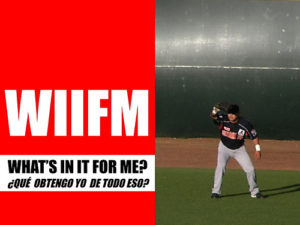
“What’s in it for me?”


Whether a product or service is life-saving or life-threatening has nothing to do with whether a client or patient is considered a client or patient — or customer. All that matters is product or service performance, and the integrity and authenticity of the person(s) representing or standing behind the product or services purchased.

The issue, say some, revolves around the concept and delivery of “high trust” vs. “low-trust.” Marketing people will be quick to recite the five criteria of effective programs, campaigns, and messages. Regardless of what name is used to define a target market (customers, clients, or patients), marketing must:

1)  Attract Attention

2)  Create Interest

3)  Stimulate Desire

4)  Bring About Action

5)  Provide Satisfaction

. . . and it really must do ALL of these to be effective.


On top of that, the rule of thumb applies to ALL FORMS of marketing – print, broadcast and outdoor advertising; sales; public (industrial, professional and community) relations; promotion; merchandising; pricing; packaging; labeling; website content; social media content ; business and appointment cards; stationery and invoices.

It applies as well to direct mail, bumper stickers and building signage, plus a hundred other uses. It applies to branding themes, logos, and jingles as well as trade and professional show banners and exhibits.

When you want to know how your business or practice is coming across to others, ask. Measure people’s responses and each marketing implementation against the five criteria. 

If you’re looking for prime examples of marketing that fails because it fails to deliver all five criteria, you need go no farther than your local hospital. Hospitals breed marketing mediocrity because they refuse to spend money on outsourced creative services and convince themselves they can handle it all in-house!

Most professional practices seem to think in similar terms. The problem is that their products and services are justifiably more expensive than the local coffee shop and must carry messages that appeal to a higher level of audience needs, but that doesn’t eliminate the need to trigger emotional buying motives.

Sophisticated products and services are not sold with dumb slogans or rational, logical appeals that push features instead of benefits. Humans are humans are humans. Market from the heart. Market benefits! Pay attention to corporate advertising for Mercedes Benz.


# # #

FREE blog subscription: Posts RSS Feed

Hal@Businessworks.US     302.933.0116

Open  Minds  Open  Doors

Many thanks for your visit and God Bless You.

Make today a GREAT day for someone!

No responses yet

Oct 04 2011

PUSHING CREATIVITY

Success seldom surfaces


when creative service


providers are squashed


. . . or does it? 


Show me a writer or designer who thrives on being torturously pushed and prodded to stressful deadlines, and I’ll show you someone who is likely to be a do-nothing PR agent or brain-dead news media person, but don’t expect to find great advertisers, marketers or creative service people thrive in angst-ridden  pandemonium.

With rare exception, creative development work that’s “rushed” breeds mediocrity (and costs more, which makes the engager a double loser!). Truly remarkable talent, it is said by many, is born of free spirit, and ample time.

Do I know exceptions? Plenty. But exceptional creativity is the product of unconstrained imagination and self-discipline. The exceptions I know –ah, including myself (!)– coulda/shoulda/woulda produced more outstanding creations if they’d (we’d) not been pushed, prodded, intimidated, threatened, and time-pressured.

My best writing has surfaced during both

great duress and great relaxation. So

maybe the rule is an exception?


My national boo0k award effort was done at my leisure. Its underperforming predecessor took two years under pressing deadlines. My worst book was written under crushing due dates. My best book –now almost ready to market– was ten years on the drawing board. My best award-winning jingle was done in one all-nighter.

My worst ad campaign took six months to research and justify and another six months to finalize and launch. My national award-winning, record-sales marketing program took three months start to finish. I have a future award-winning children’s book series ready to launch after 40 years in hiding.

And only heaven knows how many hundreds of new business startups have benefited by my rushing attacks on their website content, news releases, packaging, media positioning, and strategic planning. Yet the most successful, sales-productive efforts I have made have come only with major investments of time.

The trouble is that upstart business owners want what they want when they want it and time is not a worthy commodity to offer when they’re sitting on a hot idea and investor dollars.

Neither patience nor perfectionism has ever been a trait of entrepreneurs.

Neither has analysis, which is typically the province of corporate muckity-mucks


Okay, so knocking this subject all over doesn’t settle the issue of business time pressures and the creative product. That, however, is the issue. Pushing and prodding and time-pressuring creative people may not always produce the best or most productive work, but it gets the job done.

Depending on circumstances and the marketplace and the economy (and who can depend on the economy?), a judgement must be made about whether you want to win awards or customers. Without a lot of room for awards on the walls of a crushing economy, the bottom line should be to insist on results, not pretty words and pictures.

Design awards only produce sales for designers. Copywriting awards only produce sales for copywriters. You can stop paying for your creative service providers to get more sales by putting some heat on their abilities to perform for you, the client.

# # #

FREE blog subscription: Posts RSS Feed

Hal@Businessworks.US     302.933.0116

Open  Minds  Open  Doors

Many thanks for your visit and God Bless You.

 Make today a GREAT day for someone!

No responses yet

Sep 22 2011

METICULOUSNESS

“Detail” Counts


Big Time In 


Small Business


My first employee review in my first real job accused me of not liking or tending to detail. Decades later, I still don’t like it or tend to it, except as absolutely required by clients, the IRS, or a book manuscript or marketing program that demands it. And even then, I still don’t like it.

After all, how can creative spirit flow freely

 with “detail anchors” weighing it down?


And, it seems when I look back, that entrepreneurs and small business owners of every conceivable description, similarly hate having to deal with detail. Yet, meticulous attention to detail is what often makes a small business become a big business. At every level: finance and operations as well as marketing and sales.

By listening carefully (vs. just hearing) to what customers and prospects say they REALLY want, you engage yourself in the world of providing detail, and the better you do at it, the better you will invariably do at not just servicing, but delighting each person and entity that you confront.

Detail –except in word choices and design applications– is not generally an area that commands great attention from those who provide creative services.

Attention to detail is most typically the milieu of those who provide accounting and legal services, intricate products, operational equipment, and safety-oriented products.


This doesn’t mean you need to be a bean counter, brain surgeon or rocket ship c0mponent manufacturer to justify the need for attention to detail. In fact, the further away from these “expected” areas of business a customer or prospect encounters what you have to offer, the more likely you are to have positive impression opportunities.

Why? Because most people don’t expect a roofer or plumber, or dog groomer, graphic illustrator, a self-proclaimed SEO or social media  ”expert,” or shoelace salesman, to be able to support product and service claims with hard evidence and factual findings –details– that boost and solidify the sales message. 

Details are what drive home the emotionally-triggered sale by providing the objective, factual, unemotional supportive features that purchasers use to justify their decisions to themselves, their spouses, their boss’s, their partners, their associates, employees, shareholders.

Details may not always be fun. But –in every sale, they prevail! Do you? Are you supporting claims with facts? Attention to detail means attention to customers and prospects . . . a practice you can never go wrong with!  

# # #

FREE blog subscription: Posts RSS Feed

Hal@Businessworks.US  302.933.0116

Open Minds Open Doors

Many thanks for your visit and God Bless You.

 Make today a GREAT day for someone!

No responses yet

Sep 20 2011

Rotten Writing?

Books, billboards, news


releases, website content, 


magazines and magazine


articles, posters and


displays, newspaper


 columns, surveys, signs,


 postcards, brochures, 


commercials, promotional


 emails, direct mail, photo


captions, jingles, branding


themelines, package labels,


training curricula, promo


literature and exhibit


 materials, webinars, sales


presentations, seminars 


lyrics, booklets, speeches,


 ebooks, blog posts, scripts


  business plans, marketing 


 strategies, love letters,  


manuals, greeting cards,


and matchbook covers


Ever write any of these yourself? How’d it come out? Did you get the results you wanted? What happened? Are you a skilled writer? An experienced wordsmith? Probably not. If you’re reading posts on this blog site, it’s because you’re an entrepreneur, a small business or professional practice owner, manager, or principal, a student, or a leader.

If you fit any of those kinds of career descriptions, odds are that you are marketing a product, service, or idea (or some combination) and the daily challenges of keeping your business or organization moving forward leaves little room for you to indulge in fantasy of seeing yourself as a talented writer. And you’re smart enough to know when to get help.

One telling characteristic of successful entrepreneurs, in fact, is that they know how to pull their ideas forward while leaving necessary professional services up to professionals they engage — CPA, attorney, management consultant, and more often than not: creative services, especially writers and designers.

Entrepreneurs, after all, are the catalysts of business and the economy, and serve as mirrors of society wants and needs. They alone are responsible for new job growth (not corporations, and certainly not government). As a result, entrepreneurs are also the most sensitive of business people, and the quickest to recruit outside expertise when they see the need.

Small business owners are far more in touch than their big business counterparts who are obsessed with analyzing with what message content and structure communicates best, and sells.

They recognize that one dot or small sweep of a design line, or one word can make the difference between sale and no sale.

They respect and appreciate the value of expertise.


So the list above is not just a teaser or composite of writing applications. It is a list of real business-related (yes, even love letters!) writing needs that most entrepreneurs are confronted with at one time or another. It is also a list of writing applications that anyone you hire to write for you should have experience with, at least most of them.

I know. I’ve written all of the above many times over. And I can tell you that a marketing writer who hasn’t written a book doesn’t know how to tell a story, and stories sell. A website content writer who hasn’t written radio and TV commercials has no sense of writing concise, punchy stuff that’s short and sweet, and short and sweet sells.

Someone who’s never written a billboard hasn’t even a clue about how to write branding lines because the discipline is the same:  Aim for 7 words or less and tell a story in those 7 words that has a beginning, middle, and ending . . . and is persuasive. And in direct mail, the more you tell, the more you sell — that means, literally, a blanket of billboards.

Writing emphasis must always be “you” focused (not “we”). It must attract attention, create interest, stimulate desire, bring about action, and deliver satisfaction. All writing –even an instruction manual– represents an opportunity to make a sale and/or create a favorable impression. The writing you have now? Does it work as hard as you do?


# # #

FREE blog subscription: Posts RSS Feed

Hal@Businessworks.US 302.933.0116

Open Minds Open Doors

Many thanks for your visit and God Bless You.

Make today a GREAT day for someone!

No responses yet

Sep 14 2011

Business Body Barometers

Where is your foot pointed?


YES, I have better things to do. NO, I am not a kinetics (body language) expert nor a walking lie detector. Like most business owners, I muddle through exchanges with others –using a combination of what I know and feel from experience– to decide on another person’s intents, genuineness, and ability to perform up to my belief system.

But I have written and taught considerably on the subject, and am frequently asked about practical business applications. So, remembering that you’re not licensed to practice psychotherapy, here’s enough body barometer stuff to shrink out some of those business head cases you deal with:

Let’s first distinguish between verbal and nonverbal communication, keeping in mind that: A) words themselves do not have meaning; only people have meaning, and that: B) Only 7% of communication is generally believed to be verbal. (38% is believed to be tone of voice, and 55%, nonverbal!)

Nonverbal communication, I recall, is accomplished in 9 different ways (there may be more, but who needs more?):

  1. AMBULATION – How someone walks. Big differences in the messages coming from someone who swishes vs, stomps or swaggers, bounces, strides, or drags.

  2. TOUCHING – The most powerful form of nonverbal communication. Consider the differences in touch for expressing anger, interest, trust, tenderness, warmth . . . and the differences in willingness to touch or be touched.

  3. EYE CONTACT – When do pupils dilate? What’s in your unconscious mind about eye colors? Trust? Sincerity? Forthrightness? Does someone stare, shoot daggers, avoid direct eye contact, glance slyly?

  4. POSTURING – Are arms and legs crossed defensively? Stand or sit slouched or erect. Severe threats promote fetal positions.

  5. TICS – Uncontrollable nervous twitches may indicate a sensing of possible threats.

  6. S UBVOCALS – Um, er, uh, whew! . . . and grunts and groans, whistles, loud swallowing, tongue clicking.

  7. DISTANCING – We each have our own Space. Comfort zones vary by person, geographical region, country, and by odors.

  8. GESTURING – A wave, thumbs up or down, an OK sign or angry fist, a V can all be acceptable in one place and not in another.

  9. VOCALISM – Say: I LOVE my children! vs. I love MY children! vs. I love my CHILDREN! vs. I love my children! Same words, but do you hear different meanings?

STROKING arms, legs, or hair often indicates a lack of affection (perhaps at the moment, perhaps in general). See if talking about how valuable that person is to your business stops that activity.  SMILES are great, but can often be a defense mechanism. THE FACE ALONE CAN PRODUCE 250,000 EXPRESSIONS! (Weird research, huh?)

Sports guys and politicians use THUMBS UP and THUMBS DOWN. Hitchhikers point THUMBS SIDEWAYS.

CONFIDENCE is often expressed by pyramiding fingers, by hands in pockets with thumbs out and by hands held behind a stiff back.

INSECURITY is frequently communicated by pinching, chewing (pens, pencils, pipe, fingernails, gums), by hands stuffed deep into pockets, as well as by smoking, fidgeting, jingling coins, tugging ears or mustache, or underclothing, by someone who frequently covers her or his mouth and /or “ahems” often.

HOW a person lights and holds a cigarette, pipe or cigar, how he or she writes (including pen pressure), how glasses and eating utensils are held and used, how food is picked up and eaten. These are barometers. So are the ways people greet and say goodbye to one another. Handshakes (firm, wimpy, bone-crushing?). Hugs and kisses. Who touches whom?

The boss’s hand on someone’s shoulder shows authority. People in power feel comfortable touching subordinates, but not the other way around! Is it acceptable to touch a pregnant woman? Holding one’s hand to show the palm is regarded as a sexual attraction signal, especially when pupils dilate.

Watch how people move toward and away from one another — Distances? Who moves first? When?  Is someone’s foot pointed toward you when she or he speaks with you, or toward the door? Effective communications requires effort!

# # #

FREE blog subscription: Posts RSS Feed

Hal@Businessworks.US 302.933.0116

Open Minds Open Doors

Many thanks for your visit and God Bless You.

Make today a GREAT day for someone!

No responses yet

Sep 01 2011

Generalist? Priceless. Specialist? Worthless.

Marketing, advertising,


PR and sales


industry-specific 


experience?


Worthless.


An Opinion 

SALES

Give me a guy who can sell ketchup, propane, decorative plants, dental insurance, or rubberbands any day over a techie geek to sell your iPads, TVs, Wii programs, or Kindles. Geeks sell geeks. Sales pros sell people. Why think small when your opportunities are big? The geek market is small. Find people who are experts at serving customers, and teach them product/service knowledge.

Looking for an exceptional salesperson for your new snack products? Stop looking in the snack product industry. Find someone who sells railroad cars full of dorm furniture to universities. Surgical supplies? Get your search engine out of the med school dropout arena and find a classy cosmetics presenter with a sparkling, eager-to-learn  personality.

Oh, and remember that great salespeople don’t make great sales managers. Only great managers make great sales managers.


PR

Find a freelance writer who has some psychology background and who can write some slam-bang persuasive headlines and sentences for all kinds of products and services– someone who is tenacious in follow-up efforts. Forget about established, specialist PR firms and groups who tend to be more interested in their names than yours. 

The public relations field is a breeding ground for con artists. I’ve seen top PR firms charge $25,000 a month and produce zero. If they can’t make what you have to sell be exciting, you lose. If they can’t follow up fanatically to get writers, reporters, editors, producers, and publishers pouncing on your story, you lose. You can teach someone with diverse quality PR experience about your industry media. 


ADVERTISING

Skip right over any provider who claims expertise in your field, unless you’re willing to spend lots of money to make no impact. Hospital advertising is a great example. It’s pathetic. Does “Excellent People” and “We Care” float your boat? Hospitals and banks are the perfect examples of advertising waste.

Get a person or small team on board who want to help you make a difference, who know how to ignite and cultivate creative thinking applications that get results. Just because something looks nice and is clever or informative doesn’t mean that it works. It may only mean that the agency is seeking to win a design award.

Don’t settle. Do your homework and due diligence. Then teach her/him/them about your business and industry.


MARKETING

Not “marketing” like healthcare people think: physician office visits with armsful of popcorn, candy, 6-foot subs, sports and concert tickets. That’s called payola, as in bring ‘em gifts and they’ll prescribe or recommend or buy your products. It’s also called bribery, and it borders on STARK Law and other ethical violation issues. 

And not marketing like Fortune 500 companies hellbent on analysis paralysis before even considering a potential packaging design, pricing structure, promotional flyer, merchandising gimmick or ad headline. Part of why big companies have too much at stake to be entrepreneurial has to do with the astronomically wasted expenses involved in frivolous product and service development and meaningless market research.

You don’t need an army of “experienced (Fill in any specialty here) marketing pros.” You need a person or small team who have a proven track-record for producing results in a variety of fields. Diversity, flexibility, and common sense abilities to work with an Objective/Strategy/Tactics framework in all types of media are what count more than “industry-specific.”

P.S. Beware “Social Media Marketing Experts” who don’t understand marketing. There are plenty of them. 


THE KEY

It’s easy to teach experienced marketing/advertising/sales/PR people what they need to know about your product or service to most effectively represent it. But it’s nearly impossible to teach industry and professional practice-specific experienced people how to market, advertise, publicize and sell.


Specialization Closes Minds 


# # #

  FREE blog subscription: Posts RSS Feed

  Hal@Businessworks.US   302.933.0116

  Open Minds Open Doors 

   Thanks for your visit and God Bless You.

  Make today a GREAT day for someone! 

No responses yet

Aug 17 2011

MOVING TARGETS

Well, HOPE never accomplished anything, but we DID get change . . .

Budget-Squeezed


Consumers,


Unemployment Line


Stampedes,


Fleeing lenders and


Investors,


Slithering and Sinking


Suppliers


The days are done of having stationary targets and goals to focus on. We are a civilization on the move. Some of the action, we asked for. Some, we didn’t. Most threatening are those that have been foisted upon us by a naive, incompetent American government that has zero experience with, or appreciation for, all things business.

Even before I give you the build-up, here’s the bottom line:

You cannot start a fire with a magnifying glass if you have to keep moving the magnifying glass because the object you’re trying to ignite keeps moving!


It’s a wonderful thing when your targets stand still for you and you have all the luxury of time to aim carefully before pulling any triggers. But that’s fantasy. Reality is that in today’s still sinking economy, everything is moving and changing — customers, employees, funding sources, referrers, vendors, and the competition are all in motion.

If you really want to put a fire under your ideas, your customers, your employees, et al, you’d be best advised to ditch the magnifying glass and figure out the best way to turn sparks to flames. You need to first explore the nature of the tasks and people involved, and assess your goal structure.

If your goals aren’t specific, realistic, flexible, AND due-dated, you’re headed into fantasyland and running on empty.

You are dealing in (with apologies to Mr. Obama) hopes and dreams: meaningless time-wasting, money-wasting, energy-wasting illusions that savvy entrepreneurs avoid like the plague.


Dreams, ambitions, and intentions are great, but only when they are followed promptly by action. Taking action is the mark of a true leader, and all successful entrepreneurs. And some action is always better than noaction. Why? Because –again– trimes have changed and the new old motto is:

“If it ain’t broke, fix it anyway!”   

Be careful to not misread the implications here that you should suddenly fly by the seat of your pants (which could undoubtedly make for an interesting journey, but highly questionable landing). Yes, do charge at your business targets, but remember that –even when they least appear to be– they are moving and changing.

Your ability to adapt effectively to changing, moving circumstances will determine your ability to succeed. How does one prepare for vigorous activity? By stretching of course. What kinds of stretches do you need to build into your daily routine to enhance your flexibility, elasticity, ability to adjust and respond?

Writers read. Language teachers do crossword puzzles. Designers go to the movies. Doctors and dentists invent gadgets. Actors “people watch” in crowds. Musicians hum. Drivers walk. Chefs try different restaurants. Shrinks join therapy groups. Figure out what works for you.   

The world’s greatest athletes –regardless of the sport– are those who practice and practice, and practice again, hitting a moving and/or changing target. The world’s greatest entrepreneurs do the same thing. Remember high school physics class and Newton’s First Law?. . .

“A body in motion tends to stay in motion!” 


# # #

  FREE blog subscription: Posts RSS Feed

  Hal@Businessworks.US   302.933.0116

  Open Minds Open Doors 

 Thanks for your visit and may God Bless You.

  Make today a GREAT day for someone! 

No responses yet

Jul 25 2011

Entrepreneurship vs. Votership

There was a time, once upon a time, when I was young and foolish, and convinced I knew everything. Well I did know everything. Of course I did. After all, I was 29 or 30 and way past the dirt-poor boyhood lessons of life and growing up. In fact, I had been growing up in New York, which –when I look back– was a miracle all by itself. I mean, who grows up in New York?


A New Yawka? Ugh, who


wants one of them around?


It’s a weird thing when you think you know it all and have seen it all and have been there and done that and have the t-shirt, and then: swhooooosh! –out of the blue– the real you, broadsided with a new learning experience.

It happened when I was one of those hot-shot Madison Avenue advertising guys you may have seen portrayed on TV’s “Mad Men,” or maybe not. (Actually, that show was not very authentic, but what does TV have to work with except half-truths anyway?). I commuted 40 minutes each way by train into the city, M-F, creating great ads.

I married too young, and as I went “over the hill” at age 30, I was already ending a messy marriage, and winning diapers-galore legal custody of my three children (2,2, and 4), one of the twins profoundly retarded. Imagine the small army of friends, neighbors and household help (from a loyal young caring live-in couple, Wayne and Peggy).

As luck would have it, my troubled twin (now PC-termed “profoundly developmentally disabled”) slept all day and cried all night as I walked the floors with her. So with endless spare time on my hands, I made the mistake of taking up with more of the politics I’d left behind as a teenage and 20-something volunteer for the Democratic Party.

I know, I know, but it was because my parents were lifelong Democrats — “The working man’s party,” my father proudly exclaimed. I figured he should know which team was the good guys because he was of course, a working man! Besides the Democrats all spoke from the heart and made powerful promises and shook my father’s hand.

So what’s changed? The Democratic Party. It walked away. Democrats are now the party of greedy union bosses, elite academics, never-say-die tree huggers, fat and happy government employees, free handout beneficiaries . . .  and UN-American, share-the-wealth-with-thieves-and-illegals-to-build-votership idealists with no sense of reality.

Then I became an entrepreneur.

Democratic Party leadership (now there’san oxymoron!) is invested in destroying entrepreneurs and entrepreneurial spirit . . . obliterating the same entrepreneurial spirit that built this great nation. They are on a relentless anti-capitalism freight train crusade to run over and destroy small business enterprises and ownership

. . . at the expense of job creation and economic survival!

Doesn’t sound like much of a good trade-off to me, but, hey, what do I know? I’m just a transplanted New Yawka whose business is busy fighting off our great White House visionaries who obviously value votership over entrepreneurship. 

Can there be such a thing as short-sighted visionaries? How about 30 million short-circuited small business ownersHow about we vote together for a change? November 6, 2012. Be there.                  


# # #

Your FREE subscription:  Posts RSS Feed 

Hal@Businessworks.US   302.933.0116 

 Open minds open doors.

 Thanks for visiting.  God bless you. 

  Make today a GREAT day for someone! 

No responses yet

Jul 23 2011

NOW AND THEN . . .

The best source of business


 is always existing and 


 past business.


What have you done lately about resurrecting contact with old friends and business associates? The amount of time, money and energy plowed into developing new business in new markets with customers and suppliers who’ve never heard of them is a phenomenal waste. Put the same effort and resources into those who already know you. 

Even brain-dead politicians know this. Why do they concentrate campaign efforts on those who have supported them in the past? Because to those people (voters), they’re known entities, and that alone is often enough to trigger contributions or in the case of business, sales. There’s no need to start the get-acquainted process from scratch.

“Go straight to the heart of the matter,”

(my father always told me!)


At the heart of winning more business in as catastrophic an economy as we’re living with, is the need to revisit, renew, and re-cultivate old friendships, old acquaintances, old customers and clients, old suppliers and vendors, old investors and lenders, old employees and employers, old partnerships and alliances. ALL former supporters.

These are people who you may have lost touch with (and perhaps on purpose), but with rapidly changing times often come changing more receptive attitudes. Someone who was an employee and left for a better career move may now be in a position of being a customer, or a referrer, or a supplier, or even an investor! How will you know? Ask.

Small business owners and managers typically avoid past contacts for many reasons, but none of those reasons (unless they would open some legal wounds) are good reasons for glossing over possible resources who have a favorable impression of you. Spend your time, money, and effort there instead of digging up new prospects!

When you communicate your message to someone who knows you, you can skip all the preambles; there’s no need to waste words explaining who you are and where you came from and how you do what you do. Go straight to the heart:  

  • “I know it’s been awhile, but I thought you’d be especially interested in . . . because . . .”

Or . . . 

  • “As soon as we put out this special (new product or service, warranty, price deal), I was reminded of how it would/might/does/could have great value/appeal/interest to/for you, and thought you may be interested in this ‘sneak preview’ of . . .”   


In the end, it’s all about consistently using the best sets of words to deliver your message, and targeting past and present business contacts which allows you to engage their interests without having to have them get past the preliminaries of who you are. That small difference puts you a giant step ahead in the sales or recruitment process. 

Oh, and a no-brainer by the way, you can also reach these people and get them to your website, store or office with personalized (free) emails or (inexpensive) postcards instead of extravagant network TV $pon$or$hip$.                                                                                                                 

# # #

 Your FREE subscription: Posts RSS Feed 

Hal@Businessworks.US  302.933.0116 

  Open minds open doors. 

 Thanks for visiting. God bless you. 

   Make today a GREAT day for someone! 

No responses yet

« Prev - Next »


Search

Tag Cloud

Action Attitude Active Listening Authenticity Behavior Is A Choice BRANDING Business Managers Business owners Choosing Behavior Communication Customers Customer Service Doctors Entrepreneur Entrepreneurial Spirit Entrepreneurs Entrepreneurship Facebook Goal-Setting Goal Criteria Goals Google HERE AND NOW Innovation INTEGRITY job creation Lawyers Leadership Listening Marketing Motivation Obama Open minds open doors! Productivity Sales Sales Professionals Small Business Small Business Managers Small Business Owners Stress Management Time Management Trust Twitter Unemployment White House Zig Ziglar

WP Cumulus Flash tag cloud by Roy Tanck requires Flash Player 9 or better.