Archive for the 'Retailing' Category

Nov 21 2011

BIZ ALPHABET SERIES…”Z”

The final subject of this, the world’s first BIZ ALPHABET Series of blog posts! (Check out “A” – “Y”)


“Z”…ZEST


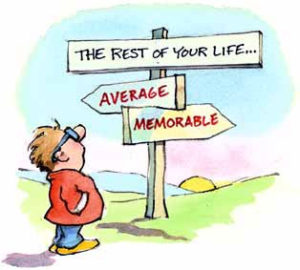
ZEST (not the soap) refers to you and your business . . . ardor, élan, gusto, joie de vivre, lust, oomph, passion, pep, pizzazz, tang, vitality, energy, zing,  zoom, zip,  zap . . . either you’ve got it or you don’t.

If you’ve got it, you can make it better. Start here now. If you don’t have it, you can get it ignited here, now. Free. No strings attached. No gimmicks! Just you and your business, and me.

~~~~~~~ 

Sounds good, you say, but who cares? Uh, your customers, your employees, your suppliers, your investors, your lenders, your community . . . and your family. Does that work for an answer? This is not just another lecture on motivation. It’s about operating your business with a competitive edge.

Let’s get to it: When did you last ask a few customers why they do business with you instead of with __________ (fill in the name of a leading competitor)? Oh, you did a survey? Well, that’s great, but there’s nothin’ like the real thing, Baby, goes the old song, and there’s nothing like straight eyeball-to-eyeball answers.

Whatever you hear back, by the way, accept and be appreciative. Do not criticize. Do not “Yes, But.” Do not argue or dismiss. There’s a reason for everything. Take it in. Write it down. Smile and say thank you. Go off and think. Odds are pretty good that the answers you’ll get will have something to do with your attitude and approach.

In other words, HOW you deal with customers, employees, and others around you is what determines more than anything else why your customers are your customers. And it’s that reputation that attracts other customers. So, if these assumption about how you deal with others is even just half right, you already have a competitive edge.

It may simply need –like the holiday carving knife– a little sharpening. Start by asking yourself if you and/or someone else who works with you have been partly or largely responsible for positive customer feedback. Do you appropriately reward that behavior when it comes from others. Rewarding positives breeds more positives.

If you get feedback that attributes your business strength to other factors –price, quality, convenience, etc.–you need to giddy-yap over to your customer service counter/person/policy/strategy/whatever, to fix it or make it better.

Why? Because in this lousy economy, it is frankly not a good sign that anything other than your outstanding service should be the #1 factor quoted by customers. You cannot any longer compete on price or packaging or quality or convenience or sustainability. Anyone with the know-how and gumption can beat you on those points. 

But no one else can be you!


No one else can treat people exactly the same as you, and therein lies your single greatest and unique competitive edge — it’s the differential that you, exclusively, can offer. Have you ever by-passed others and gone out of your way to deal with a particular business because you relate better to the source? Of course you have.

We all seek individuals and entities we feel offer more integrity, more authenticity, a better reputation, provide more extras. So your customers are different? What’s keeping you from adjusting, over-hauling, boosting or perking up your business approaches and attitude NOW? Aren’t roadblocks, after all, a matter of choice?

Choose more of what works. Put a little spice in your spirit! And remember what you put out and how you come across – your spirit — is yours alone. No one else has or can use your strengths. 


# # #

FREE blog subscription: Posts RSS Feed

Hal@Businessworks.US  302.933.0116

Open  Minds  Open  Doors

Many thanks for your visit and God Bless You.

Make today a GREAT day for someone!

No responses yet

Nov 17 2011

BIZ ALPHABET SERIES… “X”

Welcome to the world’s first SMALL BIZ Alphabet Series of blog posts!

“X”…XYLOPHONE


If corporate types might be best equated with a musical instrument, it would likely be a bass drum. Big companies march to a loud, dull, steady, monotonous, unimaginative beat. They thrive on maintaining status quo.

And if government employees might be best equated with a musical instrument, it would probably be a kazoo because it requires no skill to use, except to be able to hum (and even politicians can hum!).

If you accept all or part of the above instrument assignments and accompanying rationales, then entrepreneurs might best be equated with a Xylophone. Like the other two match-ups, this instrument is self-energized, but unlike the other two, the xylophone requires both: musical skill and a sense of rhythm.

[Besides, there's hardly an army of small business related words that start with the letter "X." In fact, my dictionary displays only a few dozen words of any kind that start with the letter "X," and so, as a matter of practicality --and my need to deliver what I started--  "Xylophone" seemed better than "x-ray"!]

The music that a xylophone actually does produce, by the way, is best characterized as bright, lively, cheerful, and allowing for great diversity, imagination, and –to be able to produce any music– self-discipline.

So there you are. If you’re the entrepreneurial spirit personified, Xylophones are in! If you’re not a true DNA entrepreneur, go hum or beat a drum. 

When did you last step back from what you’re doing, step back from your business, and what your business is doing? When did you last –like a doctor–perform a diagnostic workup on your SELF? On your business? Do you really want to know more about what others think? You should!

It is, after all, what others think –your reputation– that ultimately confirms your message, and determines your sales success. 

First of all, diagnostics always start with a patient history. So make a bullet list of high spots that you and your business have experienced in your lives. (Limit yourself to 3 minutes for each list.)

Next, start testing that history against things you know… abstract categories work best: musical instruments, animals, plants, sports, birds, song titles, cities… ask others what  (animal, plant, instrument, sport, etc.) they think you and/or your business are most closely associated with in their minds: a lion, fox, snake, turkey, hog, poison ivy, thorny vines, a mighty oak, MMA, hockey, fly fishing?

The most useful input on these assessments IF you can avoid rebuttal, and just quietly take in and process what you learn– comes from asking others how they would equate and match you and your business. (Remember to sincerely thank each person you ask, for each input, even when it may seem insulting to you!)

Now. take what you get, and sift through what you think are the meanings attached to each. Decide what fits best, and what directions that the equations others draw may best send you.

Then go!

Play your Xylophone!  


# # #

FREE blog subscription: Posts RSS Feed

Hal@Businessworks.US  302.933.0116

Open  Minds  Open  Doors

Many thanks for your visit and God Bless You.

 Make today a GREAT day for someone!

No responses yet

Nov 15 2011

BIZ ALPHABET SERIES…”V”

Welcome to the world’s first SMALL BIZ Alphabet Series of blog posts!

“V”…VOLUME


As in “Turn it up!” or “Turn it down!”?  A book? Number of patient visits? Amount of sales? Number of decibels your message uses? The major dial on the 4-wheeled boombox next to you at the traffic light? Depends. Are you an entrepreneur?       

~~~~~~~

As an entrepreneur, you may periodically plunk all or nearly all into your brain’s search window for updates. Sure, the muscle beach teeny-bopper with his car audio base vibrating 3 blocks away can be annoying, especially when you’re on your cell with a major client, a lawyer or your mother (sometimes indistinguishable!).

And keeping the volume turned up isn’t limited to rap stars, hard rockers, QVC, and your grandfather. Did you ever see or hear a soft-spoken, low volume car dealership commercial?

(Okay, maybe –maybe– for something like the 1931 Bugatti Royale Kellner Coupe, which was sold for $8,700,000 in 1987, where we can figure that anybody with a gazillion dollars to spend on a car probably won’t respond well to shouts, y’think?)  

But it’s important to remind your marketing and/or salesperson or team (and yourself, anytime you give a presentation) that in the same type of “actions speak louder than words” context, w~h~i~s~p~e~r~s can speak louder than SHOUTS!  They serve to seize the moment! Sales stage presentations are famous for this technique.

It’s all about getting prospects, customers, audiences to sit up on the edges of their seats and listen hard.

Applied to packaging, I once discovered that every brand product in a particular section of the supermarket has a red and gold package–every one. I succeeded in talking my smaller, lesser known client into whispering with black and white packaging, which in a sea of red and gold, visually popped off the shelf into big-time POP sales.

Volume, then, is also visual, and it includes appearance when you’re in sales (and who isn’t?). Dressing conservatively helps salespeople keep prospect’s attention on the goods or services. Flamboyant clothing, jewelry, hair and makeup styles distract from the message. Save the Hawaiian shirt for weekends on your yacht.

Now, since doctors are a different breed of entrepreneurial animal altogether, it’s no wonder that their primary business focus is on growing patient volume. After all, doctors have no inventory, no one else (besides perhaps other doctor partners) they can pass patients off to for diagnostics and treatment (except referrals).

So the goal is to keep pushing for increased “volume” (in case you’ve wondered about that sitting in a healthcare waiting room with 20 other people waiting to see one doctor for 12 minutes!). Doctors have gotten better at delegating but there is a magic breaking point where reimbursements don’t cover added staff services.

Oh, and sales volume? A good thing, generally, but not always a good thing. Depends on the nature of your business. Ask your accountant about this. Too much volume can overwhelm ability to deliver the goods, and distract from the focal point of your business or marketing strategy.

Yes, and Volumes have been written about how to reach out and grab a customer, a prospect, but the bottom line is that if your marketing messages fail, your business fails. Take a hard look at the words you’re using. Decide whether your ads grab, win, lurk or suck? Do they just win a lot of meaningless awards, instead of sales?

 # # #

FREE blog subscription: Posts RSS Feed

Hal@Businessworks.US  302.933.0116

Open  Minds  Open  Doors

Many thanks for your visit and God Bless You.

 Make today a GREAT day for someone!

No responses yet

Nov 14 2011

BIZ ALPHABET SERIES…”U”

Welcome to the world’s first SMALL BIZ Alphabet Series of blog posts!

“U”…UNIQUENESS


You already know that you’re different, or you’d be watching TV right now. Isn’t that so? People who enjoy being the same, work for big organizations where they can get lost in the waves instead of having  to make them, and they don’t surf blog posts about being unique because even though they are, they don’t believe they are.

You, on the other hand, are unique and know it. At various times in your life, you’ve been called weird, odd, a know-it-all, an opportunist, a hustler, a misfit, a trouble-maker, an instigator, an oddball, and one who marches to his or her own drum. You’re an entrepreneur. You own and/or run a business. You live for your idea to succeed. 

Now, what about your business? Do you think your business must be unique too? Odds are it’s not. In fact, the more unique your products or services are, the less likely your business is to survive. Investors and lenders like substantial, tangible businesses run by people with substantial, tangible, directly-related experience.

Customers are gun-shy about trying new products and services. They are also deathly afraid of buying technology that will be obsolete before they finish making payments. What does that leave? Pizza? Chickens? Cardboard? Dishwasher maintenance contracts? Delivery services?  Toothpaste? Cemetery Recycling?

Ah, so the trick isn’t necessarily (or even often) having a unique business. What then? Isn’t it more like being able to use your personal and instinctive uniqueness to design or develop or produce a unique perspective of what you have to sell? A competitive advantage? A single differential? Maybe. Maybe it’s just something that seems unique. 

It’s true, isn’t it, that uniqueness can be created with the stroke of a pen or keypad? Nike’s SWOOSH for example? And how about the 1, 2, and 3-word brandings that stick in our minds… the ones that sell?

  • 1-word example:  UNcola (for 7-Up when Coke and Pepsi were under the dark caffeine drink health destruction PR axe)
  • 2-word example:  “Got Milk?” (hard to top that message)
  • 3-word example:  “I’m Lovin’ It!” (even if you hate burgers and fries!)

In other words, BRANDING is what is responsible (my guess: 99% of the time) for UNIQUENESS. What we perceive, remember, is what we believe. Stated another way: Perceptions are facts! Does this imply that anything cute, different, or smashing, will create uniqueness which will create sales. Not a chance. Only substance succeeds.

BRANDING, then is about using unique ways to paint a picture of a business that delivers substance. And not unlike the old Marshall Mcluhan enlightenment that “The medium is the message,” could it also be that “Uniqueness is the message”? So it’s HOW we market that’s more important than what it is that we actually take to market?

Well, if these thoughts are even only partly correct, YOU have a distinct advantage in being able to present your business venture and offerings as unique, because you already are to start with. (We established that in the first sentence of this post.) And that which is unique rarely breeds that which is routine. Ask any spotted owl. 


# # #

FREE blog subscription: Posts RSS Feed

Hal@Businessworks.US  302.933.0116

Open  Minds  Open Doors

Many thanks for your visit and God Bless You.

Make today a GREAT day for someone!

No responses yet

Nov 13 2011

BIZ ALPHABET SERIES…”T”

Welcome to the world’s first SMALL BIZ Alphabet Series of blog posts!

“T”…TRUST


If you’re reading this, you already know–in spite of claims by mainstream media talking heads, corporate moguls, misguided unionists, and political loudmouths– that entrepreneurial spirit and entrepreneurs are the catalysts of society. When small business innovates, it creates jobs. When it creates jobs, the economy flourishes.

Perhaps it hasn’t occurred to you, but the backbone of entrepreneurial spirit, entrepreneurship, small business ownership and management, and all of what it is that each of us does every day to move our business interests and pursuits forward, is TRUST.  


SMALL BUSINESS RUNS ON HANDSHAKES!


We thrive on handshakes, assurances, nods of the head, genuine smiles, pats on the back, and words like , “Okay, let’s go!” and “I’ll try it.” Sure, there are times when we trust that we get stung, bitten, cut off at the knees, ripped off, swindled, clobbered and killed. Yet we feistily avoid contracts, and live to avoid lawyers.

When we accept partial commitments, and move forward, we do it in good faith, but may cringe a little depending on age, and by how much we’ve been beaten up by dishonorable associates, employees, investors, and customers.  Even when the bad outnumbers the good, we still tend to “chalk it up to experience.”

We keep going, sometimes reluctantly. Sometimes we get up from the canvas too slowly for our own good, and get hit again before we’ve regained balance. Sometimes we’re preoccupied with damage reports instead of with boosting sales.

Sometimes we forget that income doesn’t come from turning out lights and cutting corners or wallowing in self-pity over having been taken advantage of. It’s an easy trap to fall into. It’s the M.O. for corporate executives and government, which goes something like this:

  • Cover your butt.

  • Justify.

  • Analyze.

  • Don’t make waves.

  • Be P.C.

  • Don’t risk.

  • Be Green.

  • Think small.


But maybe that’s because big business and government simply don’t trust handshakes and authenticity. And they are quick to point to the losses from failed relationships. Maybe it’s because they are so heavily invested in protecting the status quo. Maybe it’s because they are controlled by disproportionate numbers of attorneys.

I’ve worked on all sides of these fences and prefer conducting business backed by the unspoken “In God We Trust” that blankets what I believe to be most entrepreneurial deals, vs. the government and big business spouting of our nation’s motto, but adhering to “In Contracts and Lawyers We Trust” as the mission that they practice.

I’ll take my lumps with God on my side rather than suffocate in legalities and paperwork required of those whose trustworthiness seems questionable. Like “The lady doth protest too much,” when I’m swarmed on by insistence for contracts, I back off. I honor my commitments and expect others to honor theirs.

Naive? I believe it’s naive to think that contracts seal a deal. I’ve lost more money and opportunities and productive relationships by having a signed contract than I have –ever– with a handshake. 

So, what’s the suggestion? Blind trust? Hardly. Due Diligence must always precede a handshake. And don’t rely on some one’s social media profile or website bio. Talk with people who know or worked with the individual(s) you’re planning to work with. Talk with -people who know or worked with those people. Be a detective.

When you’re satisfied with what you learn, trust your judgement, trust in God, and pay –or get paid– in chunks.


The bottom line? Take heart. Believe in yourself. Remember you are not in business to be in court, to waste time and energy dwelling on losses, nor to make lawyers rich. If you can’t trust a handshake and recognize it will sometimes cost you, you might want to look at that cone placement job with the Roads Department.


Oh, remember too that there are 30 million small business owners, and we will make a difference on November 6, 2012.  


# # #

FREE blog subscription: Posts RSS Feed

Hal@Businessworks.US  302.933.0116

Open  Minds  Open  Doors

Many thanks for your visit and God Bless You.

 Make today a GREAT day for someone!

No responses yet

Nov 06 2011

BIZ ALPHABET SERIES…”O”

Welcome to the world’s first SMALL BIZ Alphabet Series of blog posts!

 “O”…ORGANIZATION 


It was going to be “O” for “Operations” but a few years back the world’s surgeons decided that “Procedures” would be a gentler, less-threatening sounding  word to use in describing what happens when they take a scalpel to your body.  And as businesses became more specialized, “Operations” began to dissolve from usage in the business community too.  So with all that phasing out activity, I came back to one of the most important multi-purpose “O” words for life and small business success: ORGANIZATION.

~~~~~~~

There are 30 million of us (small business owners and entrepreneurs) kicking around out there, somewhere between Hawaii, Florida, Maine, and Alaska (Whew! A lot of kicking!), and –artistic, creative types not withstanding– those among us with the strongest sense of organization will generally prevail in the success arena.

“Organization” is both the dynamics of the people you’re involved with — what’s the business “chemistry”?– AND how effective are your planning and doing (action) skills? “Team chemistry” wins in sports (Just re-live World Series Game 6 a few days ago), but it also –like people and task organizing skills– wins in business.

There are of course, entire books, courses, and training programs devoted to OD (Organizational Development), so don’t expect a 700-word crash course here, but you can expect to have your cage rattled. After all, who else is going to risk being in your face and telling you to get your act together better than you have been? Right. Read on.

Now, most of what I do is write, design, create, sell, email, meet, and talk on the phone, so I’m not exactly the world’s most organized guy, but –thanks to Kathy– most all of the organizational chores associated with running a business are taken care of by her capable hands and organized brain. She actually excels at it. (Thank heaven!)

So one important rule of thumb is that if organization skills escape you, or you don’t want to justify the time it takes to sort out, prioritize, plan, and execute tasks, find someone you can trust and rely on (almost always, by the way, a spouse, because no one else really shares your values) to do the scheduling, paperwork, computer tasks, etc.

And since you probably have two thumbs, another important rule is to give up one hour every Monday to meet with your organization person or team to review progress and problems, and get the ducks in a row. (Monday, because issues can be dealt with during the week; issues raised on Thursday or Friday never get done). 

I read somewhere that a famous sales guru I’ve always admired, made a dumb statement. He said It’s not time you need to manage; it’s your attitude. I understand the intent, but in reality, all entrepreneurs, by definition, have a positive attitude. Managing time is the challenge because we have only a limited amount of it available.

Not to belabor the point, but there are just so many seconds in a minute, so many minutes in an hour, so many hours in a day, so many days in a week, so many weeks in a month, so many months in a year . . . and just so many years in a lifetime, assuming you’re not from outer space just because you might act it! (Sorry, couldn’t resist.) 

There are at least 3 zillion magic formulas for managing your emails. If you limit phone call message returns from 11:30am until noon, and from 4:30pm until 5pm, you will be more productive. People do not want to talk too much when they’re thinking about lunch or heading home.

When you make to-do lists, date them and chunk them up into small parts of big tasks. Prioritize item urgency. Cross the done deeds off with a highlighter so you can look back to see what was accomplished. If you really must use other than pen and pad because you are laptop or handheld-addicted, it’s not great, but better than nothing.

In short, experiment, but do whatever works best for you. Whatever you do– don’t ignore or avoid focusing on the getting-ready-to-act parts of your business before you charge headlong into them. Not being organized is a common entrepreneurial ailment that can crush a venture before it ever gets off the ground. Ready? Set? Go!


# # #

FREE blog subscription: Posts RSS Feed

Hal@Businessworks.US  302.933.0116

Open  Minds  Open  Doors

Many thanks for your visit and God Bless You.

 Make today a GREAT day for someone!

No responses yet

Oct 24 2011

BIZ ALPHABET SERIES…”I”

 “I”…INTEGRITY 


“Integrity is

doing the right thing

even when no one is watching.”

-  C.S. Lewis

A person of integrity. Everyone wants the label, but few ever earn it. What’s the roadblock? Human nature. It’s in our bones that when push comes to shove in times of trouble, and having integrity implies being generous — we tend instead to recoil and become selfish.

Integrity means keeping your promises. It means standing up for what you believe in no matter the cost. It suggests honorable behavior in the face of temptation to be dishonorable. What kinds of behavior constitute “dishonorable”? Surely, you can think of examples. Here are a few:

  • A business owner who consistently sells used or outdated products or services as new
  • An investor seeking 70% ownership in a business startup venture for cash infusion that represents just a dollar-value fraction of the entrepreneur’s confirmed and already contributed sweat equity.
  • A professional practice partner recruited under the guise of promised freedom to function in her area of specialization who is back-seated into generalist tasks through a contractual loophole.
  • A business partner who accepts responsibility for operations, but then instead spends fulltime efforts in sales which he knows nothing about.
  • The boss who repeatedly gets in the face of irate customers, rather than simply satisfying customer requests –even unreasonable ones.
  • The verbally-agreed-to partnership that’s thrown to the wind when one of the founders is introduced (by the discounted partner) to a money source . . . and the money source himself, who clearly places no value on the relationship or the investment opportunity.
  • Successful business owner refusal to provide growth opportunities for entry-level employees because increasing their responsibilities will force increased compensation packages.

The Dash To Integrity


Being selfish, as in greedy and being unnecessarily protective, is not the same as being self-ish as in “oriented toward one’s self,” which is a positive direction for personal growth.

Being tuned in to what makes you tick is the most effective tool available on the planet for having a better sense of how to deal most productively and most happily with others.

In fact, being self-ish is a direct road to integrity.

 Odd, isn’t it that a dash between “self” and “ish”

can make such a dramatic difference?


Truth is that when we can be more focused on HOW we choose certain behaviors, we can then be more focused on improving ourselves by improving our own behaviors, which better equips us as leaders to more positively impact other’s behaviors.

It may be worth the reminder, by the way, that all of these actions build character and integrity.

All these actions are also choices. So the place to start or re-start yourself on the path to higher integrity –for yourself and your business– is to recognize that you can take initiative at the drop of a hat, or iPad. Simply make more choices in favor of integrity, and know that you are free to make those choices beginning this second! 


# # #

FREE blog subscription: Posts RSS Feed

Hal@Businessworks.US    302.933.0116

Open  Minds  Open  Doors

Many thanks for your visit and God Bless You.

Make today a GREAT day for someone!

No responses yet

Oct 18 2011

BIZ ALPHABET SERIES…”E”

Welcome to the world’s first SMALL BIZ Alphabet Series of blog posts!

 “E”…ENERGY


When you check out this blog’s timeless small business input archives with search window keywords, you’ll find a wealth of useful information and creative ideas for boosting sales, the economy, entrepreneurship, employee motivation and productivity, stress and time management, communication skills,  marketing and branding results and customer service, but not a whole lot of attention on the critical business success ingredient of ENERGY, so here goes:

~~~~~~~


ENERGY is mental and emotional

as well as physical.

It is easily spent and

 sometimes hard to muster.


Many of the dynamics and characteristics of energy apply equally to non-human energy sources and resources, but — here, we’re talking about your life in small business. So if you came here expecting some kind of eco-freak dissertation on Mr. Gore’s award-winning global warming hoax, you can delete and surf on!

Small business and professional practices demand never-ending energy management and infusion. So most small business owners and managers and professional practice principals are forever searching for new sources. “Where do you get it?” I’m often asked.

Well, it makes sense to “be,” as Thoreau once urged, “forever on the alert.” Small business energy. It’s not like it comes from cultivating some underground mine, or panning a streambed for nuggets, or plugging yourself into an outlet (yet!), and none of us want to play around with keys and kites in lightning storms. So, where do you get it?

Small business energy is extracted daily from passion for making your small business idea succeed. You don’t suck it out with a turkey baster or hypodermic needle. You simply direct your mind to reach inside of you and pull it up to the surface, or the front burner as some would say. Or let it just sit there and create mold.

Of course it can be stimulated by “outside” people, events, and circumstances, but it is born and raised inside your self (separated into two words on purpose). The secret is to recognize it, accept it, and nurture it. Hey, that’s great, you may say, but what’s the how-to part? What are the steps to make it work?

Sorry to have to be the messenger, but the only magic formula I’ve ever seen in many years of entrepreneuring work and writing and startups and coaching always comes back to the same reality ingredients: 

  • Exercise regularly  

  • Eat nutritiously

  • Sleep enough

  • Moderation in both eating and drinking

  • No smoking or drugs

  • Listen hard and talk little (take notes)

  • Love your family

  • Respect everyone you come in contact with every day

  • Pray

Small business energy, an life energy of course as well –in fact ANY kind of energy– doesn’t happen or get channeled just because we wish for it. It’s all about nurturing your resources, constantly adjusting your attitude, and recognizing that every day and every night is a new opportunity to do the best that you can do.

Start with the next 86,400 seconds!

# # #

FREE blog subscription: Posts RSS Feed

Hal@Businessworks.US  302.933.0116

Open  Minds  Open  Doors

Many thanks for your visit and God Bless You.

 Make today a GREAT day for someone!

No responses yet

Oct 16 2011

BIZ ALPHABET SERIES…”C”

Welcome to the world’s first

BIZ ALPHABET SERIES of blog posts


“C”…


CUSTOMERS/CONSUMERS


CUSTOMERS and CONSUMERS. These are sometimes, but not always, one in the same.

You buy a can of beans; you cook and eat the beans; you are both the customer and the consumer. But, If I am 6-years-old and badger you to buy me Chocolate Tsunami Cookies because “They Make Waves When Dunked in Milk,” and you buy them and I eat them – then you are the customer and I am the consumer.

In that situation, we are very different people indeed, but the bottom line to the Chocolate Tsunami Cookie Company marketing people is that I, the consumer, have influenced your customer purchase.

The monster corporations out there have monster R&D departments bursting at the seams with monster (3, 6, 9, and 12-month long)  research projects, and are busily preparing monster evaluations, assessments, analyses, executive summaries, and follow-up surveys and studies to support the research findings.

Many of these undertakings are aimed at identifying (in the case of the Chocolate Tsunami brand) which 6-year-olds in which towns are watching which TV shows, and who are most likely to influence their parents (or the most lenient or susceptable parent) to purchase the cookie brand on the next shopping trip.

Oh, and do they have the parent’s email address?


Small business owners know better

than to waste such time and expense.


They make the cookies, sell the cookies, gather feedback from some kids and parents, adjust the manufacturing (or pricing, packaging, promotion) and sell them again. All the while the monsters have no product. They are still doing statistical analysis of adolescent sugar intake.

But too often small business owners direct their marketing messages to the buying customers when actual purchase decisions are being made by the ultimate consumers and/or other influencers. [Women, for example, purchase more wine, but men are almost always the ones who specify what type and brand to buy.]

Small business owners often overlook that different messages need to be directed to different market targets. Parents buying cookies that they are pleaded with to get by their children may require a bit more rationality attached to the emotional appeal that’s focused on persuading the children.

“Making Waves When Dunked in Milk” may be a cute line for something named Chocolate Tsunami Cookies. It could probably attract attention and create interest for any age.

While a child may, however, simply buy into the slogan– Mom or Dad need to know that the chocolate and flour used are organic, or that every purchase comes with free quart of milk or roll of paper towels . . . or that they will be the talk of the neighborhood because their kids are the only ones who can’t “make waves.” 

The bottom line is that by focusing marketing efforts on customers alone risks losing potential business that’s generated by ultimate consumers.

Using the same message in the same ways doesn’t do it. 

KEEP your branding theme and slogan, but address different interests with different language in different media whenever your customers and consumers are different in age or attitude or responsibility or capability.


A handicapped senior may have primary concerns about the safety and ease of use for a stair-lift, while the family making the arrangements may be more focused on price, insurance coverage, and service warranty. The best way to cover all your bases is to ask customers and consumers questions, and keep asking. And Listening!


# # #

FREE blog subscription: Posts RSS Feed

Hal@Businessworks.US     302.933.0116

Open  Minds  Open  Doors

Many thanks for your visit and God Bless You.

 Make today a GREAT day for someone

No responses yet

Oct 10 2011

“Business As Usual” Spells Failure

If you’re not rattling cages,


reserve your business


headstone now!


                 ~ ~ ~                  


C’mon, Hal, the Halloween season gettin’ to you?

Waiting with tricks instead of treats? 

Not me. I rattle cages.


But what about you? Are you depending on others to scare up some new business? Maybe you’ve seen too many stun-gunned tongues (say that five times fast!) and zombie axe murderers on late night TV? Too many ghoulish retail displays? Maybe you almost died? 

If every chainsaw you see reminds you of a massacre, maybe you’re running on (or from?) fear? No? Well if you’re not shaking up your business every week, it may be that you’re running on ambivalence and, in turn, leading the county coroner to your business doorstep.

Investing in the status quo with your business is a no-action action that –depending on how secure your finances are– will either provoke a knife plunge into the heart of your enterprise or cause business death by potato peeler. If 2012 means continued business life, it must also mean continuing dramatic action at every level.

If it ain’t broke, fix it anyway.


Stop being afraid of stirring up the competition. The most successful retail businesses are those located in the same geographical areas as their competitors. Competition stimulates consume traffic. Your website’s not up to snuff? Bite the bullet; get some cash out from under the mattress, and pay a professional to polish up your act!

Can’t afford the advertising you want? Stop advertising. Go to (free) Twitter and Facebook and LinkedIn instead. Start doing (free) public relations instead — newsworthy news releases, captioned newsworthy photos, special events (e.g., charity-based, combined with other businesses, educational programs).

Are your employees, suppliers, referrers, investors, community supporters challenged enough? Are you putting out strong motivational incentives to get the (free) word-of-mouth going? Are you running contests that provoke fun and prompt action? (Hint: No need for elaborate or expensive prizes if enough imagination is exercised).

Shake it up!


Have you given presentations at local colleges, high schools, community centers, and then promoted them and followed up with news releases and unusual photos? Have you compiled a media “hit list” of appropriate editors and writers and publishers who would have a natural interest in your business and business pursuits?

Do you have an “elevator speech”? Do you carry business cards and a notepad with you at all times? Do you ask questions 20% of the time and listen to answers (and jot them in your notebook) 80% of the time? Have you collected email addresses everyplace you go? Are you using them to send worthwhile info out?

“Business As Usual” means inactivity, nothing changing, no excitement, no hustle. It will take you straight to the business burial grounds up in the sky (or somewhere?) and you might want to stop off at your lawyer and accountants’ offices on the way to fill out bankruptcy papers. This economy has no mercy.

If you’ve got guts and gumption, nurture them. Stimulate them. Ignite them. Explode them. Make them work for you. 


# # #

FREE blog subscription: Posts RSS Feed

Hal@Businessworks.US   302.933.0116

Open  Minds  Open  Doors

Many thanks for your visit and God Bless You.

 Make today a GREAT day for someone!

2 responses so far

« Prev - Next »


Search

Tag Cloud

Action Attitude Active Listening Authenticity Behavior Is A Choice BRANDING Business Managers Business owners Choosing Behavior Communication Customers Customer Service Doctors Entrepreneur Entrepreneurial Spirit Entrepreneurs Entrepreneurship Facebook Goal-Setting Goal Criteria Goals Google HERE AND NOW Innovation INTEGRITY job creation Lawyers Leadership Listening Marketing Motivation Obama Open minds open doors! Productivity Sales Sales Professionals Small Business Small Business Managers Small Business Owners Stress Management Time Management Trust Twitter Unemployment White House Zig Ziglar

WP Cumulus Flash tag cloud by Roy Tanck requires Flash Player 9 or better.